


Food allergy testing in atopic dermatitis
Source : https://www.jaadinternational.org/article/S2666-3287(22)00103-1/fulltext
Food allergy and food-related worsening of dermatitis can occur in patients with atopic dermatitis (AD). We reviewed the relationship of AD with food allergen hypersensitivity and the risks and benefits...
Conclusion: Some younger children with moderate-to-severe AD who failed standard therapy may have FA coexpression or food-triggered AD. Egg, milk, and peanut account for >80% of FA in AD.

Managing Atopic Dermatitis in Skin of Color
Source : https://www.dermatologytimes.com/view/managing-atopic-dermatitis-in-skin-of-color
Despite the recent significant advances in both topical and oral dermatologic therapy, atopic dermatitis (AD) remains a difficult-to-treat skin disease and can be particularly challenging in patients with skin of...
Discussion: All dermatologists should strive to incorporate EASI, BSA, IGA, Patient-Oriented Eczema Measures, and Dermatology Life Quality Index [scores] in their clinical assessments, because what we do in research can easily translate to clinical practice."
-
Jeremy Moss, Medical director and physician3yrI agree with Dr Honig that one of the key features of AD that is vexing for skin of color patients is dyspigmentation, both hypo- and hyperpigmentation. It will Show More
-
Barbara Honig3yrMore recent and clinically effective steroid-sparing agents, both topical like opzelura and biologics or oral JAKs, are particularly useful in treating AD in skin of color because there is no Show More

Type 2 Inflammation Contributes to Skin Barrier Dysfunction in Atopic Dermatitis
Source : https://www.ncbi.nlm.nih.gov/pmc/articles/PMC9428921/
JID Innov. 2022 Sep; 2(5): 100131. Skin barrier dysfunction, a defining feature of atopic dermatitis (AD), arises from multiple interacting systems. In AD, skin inflammation is caused by host-environment interactions...
Conclusion: Targeting type 2 cytokines in AD has a broad range of beneficial effects on the components of the skin barrier, including lipids, proteins, skin pH, corneocyte structure, TJs, sweat glands, and the microbiome, reinforcing the notion that AD is a systemic type 2 inflammatory disease.
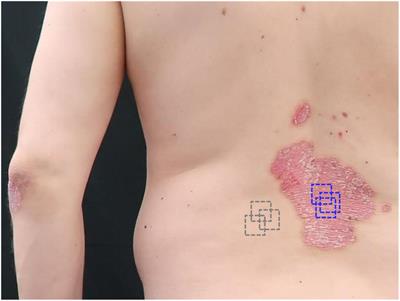
Optical coherence tomography for monitoring biologic therapy in psoriasis and atopic dermatitis: A case series
Source : https://www.frontiersin.org/articles/10.3389/fmed.2022.995883/abstract
Biologic therapies are increasingly used to treat chronic inflammatory skin diseases such as psoriasis and atopic dermatitis. In clinical practice, scores based on evaluation of objective and subjective symptoms are...
Discussion: Imaging parameters may enable objective quantification of inflammation in psoriasis or atopic dermatitis in selected representative skin areas. OCT may reveal persistent subclinical inflammation in atopic dermatitis beyond clinical remission.

Dupilumab in children aged 6 months to younger than 6 years with uncontrolled atopic dermatitis: a randomised, double-blind, placebo-controlled, phase 3 trial
Source : https://www.thelancet.com/journals/lancet/article/PIIS0140-6736(22)01539-2/fulltext
Dupilumab significantly improved atopic dermatitis signs and symptoms versus placebo in children younger than 6 years. Dupilumab was well tolerated and showed an acceptable safety profile, similar to results in...
Conclusion: Dupilumab significantly improved atopic dermatitis signs and symptoms versus placebo in children younger than 6 years. Dupilumab was well tolerated and showed an acceptable safety profile, similar to results in older children and adults.