



Impact of itch and skin pain on quality of life in adult patients with atopic dermatitis in Japan: results from a real-world, point-in-time, survey of physicians and patients - PubMed
Source : https://pubmed.ncbi.nlm.nih.gov/35787197/
doi: 10.1080/03007995.2022.2092352. Online ahead of print. 1 Drug Development and Medical Affairs, Eli Lilly Japan K.K, Kobe, Japan. 2 Adelphi Real World, Bollington, UK. 3 Department of Dermatology, Kyoto University...
Conclusion: Impact of itch and skin pain on quality of life in adult patients with atopic dermatitis in Japan: results from a real-world, point-in-time, survey of physicians and patients.
Discussion: The disease burden of AD on adults living with the condition is multi-dimensional and associated with a variety of factors.
-
Dr Hamid4yrburden in adults are limited in scope with gaps in understanding of the adult patient lived experience.
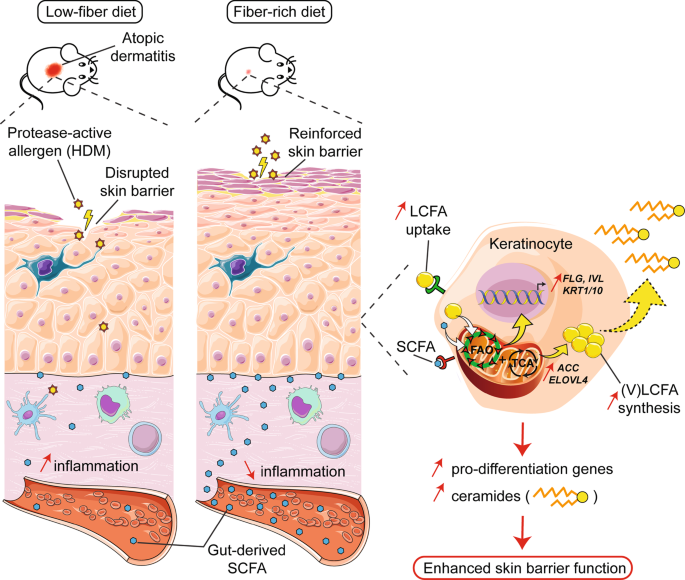
Gut-derived short-chain fatty acids modulate skin barrier integrity by promoting keratinocyte metabolism and differentiation - Mucosal Immunology
Source : https://www.nature.com/articles/s41385-022-00524-9
Barrier integrity is central to the maintenance of healthy immunological homeostasis. Impaired skin barrier function is linked with enhanced allergen sensitization and the development of diseases such as atopic dermatitis...
Discussion: We report here that dietary fibre and the SCFA, butyrate, reduce the magnitude of disease in a model of allergen-mediated ADLSI primarily by strengthening skin barrier function before, and particularly following allergen exposure.

Dr Elaine Siegfried on Preventive Strategies to Reduce Comorbidity Risk in Atopic Dermatitis
Controlling atopic dermatitis early on with novel drugs that address the primary immune dysfunction of the disease can have a disease-modifying impact in reducing risk of comorbid conditions, said Elaine...
Discussion: We may in fact be into a new era of disease-modifying anti-inflammatory medications.

The Atopic March and Beyond - Other Health Issues Connected with Atopic Dermatitis
Source : https://nationaleczema.org/blog/beyond-the-atopic-march/
Scientific studies and patient testimonials have firmly demonstrated that atopic dermatitis (AD) is much more than a skin disease, with impacts that can affect virtually every aspect of life. In...
Discussion: Active areas of current research are sorting out which diseases and symptoms are truly co-associated with AD and understanding how the contributing biological mechanisms and factors like environment, genetics and patient demographics impact development of comorbidities.