


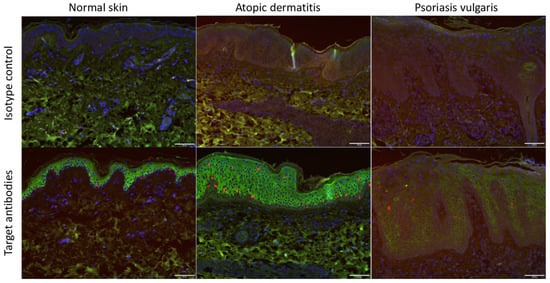
IL-33 Enhances ACE2 Expression on Epidermal Keratinocytes in Atopic Dermatitis: A Plausible Issue for SARS-CoV-2 Transmission in Inflamed Atopic Skin
Source : https://doi.org/10.3390/biomedicines10051183
Background: Interleukin-33 (IL-33) is an important cytokine in the pathophysiology of atopic dermatitis (AD) and in the progression of COVID-19. Angiotensin converting enzyme 2 (ACE2), the entry receptor for SARS-CoV-2,...
Conclusion: This is the first study to reveal that IL-33 enhances ACE2 expression on keratinocytes via ERK. Although further mechanistic studies are required, the increased ACE2 expression in IL-33 might have a biological implication on the transmission of SARS-CoV-2 in patients with AD.

7-Methoxyisoflavone ameliorates atopic dermatitis symptoms by regulating multiple signaling pathways and reducing chemokine production - PubMed
Source : https://pubmed.ncbi.nlm.nih.gov/35610286/
7-Met, a derivative of soybean isoflavone, is a natural flavonoid compound that has been reported to have multiple signaling pathways regulation effects. This study investigated the therapeutic effects of 7-Met...
Our study showed that 7-Methoxyisoflavone alleviated atopic dermatitis by regulating multiple signaling pathways and downregulating chemokine production.
Atopic heredity modifies the association between maternal vitamin D status in pregnancy and the risk of atopic disease in childhood: an observational study - Nutrition Journal
Source : https://nutritionj.biomedcentral.com/articles/10.1186/s12937-022-00787-9
Background The relationship between maternal vitamin D status in pregnancy and the development of atopic diseases in the offspring has been frequently studied, but with contradictory results. Previous studies have...
Conclusions: Among children without reported atopic heredity, higher maternal vitamin D status and intake during pregnancy was associated with increased risk of reported atopic disease.

Recent insights into the management of treatment-resistant pediatric atopic dermatitis
Source : https://www.ncbi.nlm.nih.gov/pmc/articles/PMC9132517/
Atopic dermatitis (AD) is a prevalent protracted inflammatory skin condition that affects approximately 12% of children globally. Topical remedies, such as pharmacologic and nonpharmacologic management, and off-label systemic medicines, have...
What is new from this article as messages for women and their families?
Treatment resistance in pediatric atopic dermatitis patients can be caused by deficient obedience or inappropriate medicine usage, a shortage of pharmaceuticals, hypersensitivity reciprocation to local application of therapeutics, cutaneous infections, and other...

The role of the skin microbiome in atopic dermatitis - correlations and consequences - PubMed
Source : https://pubmed.ncbi.nlm.nih.gov/35384293/
The physical barrier function of the skin is significantly supported by the (epi-)dermal immune system and the skin's own microbiome. Atopic dermatitis is characterized by an imbalance of all these...
Overall, the use of topical probiotics is, therefore, an intriguing option for the treatment of AD that should be pursued in larger randomized and controlled studies. In this context, the effects achieved with different bacterial strains seem to be by no means mechanistically redundant. The fact that direct manipulation of the skin microbiome is...