


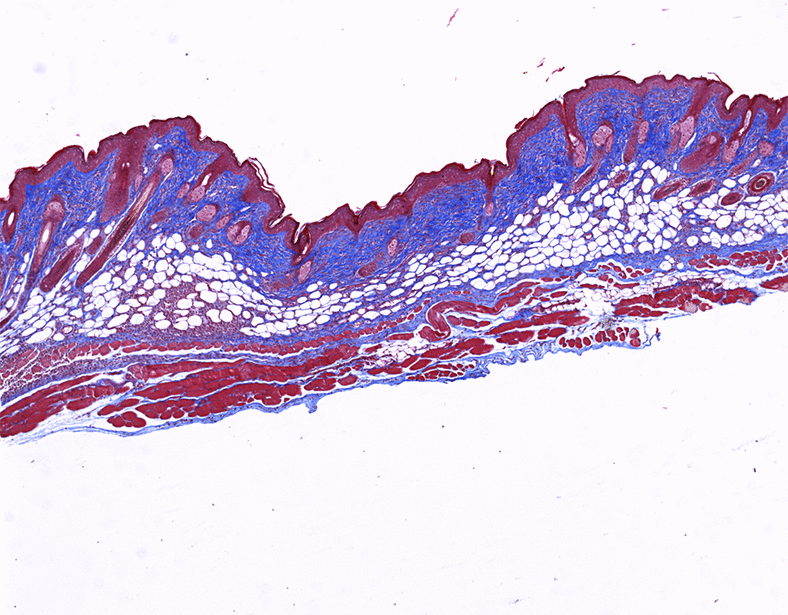
NF-κB perturbation reveals unique immunomodulatory functions in Prx1+ fibroblasts that promote development of atopic dermatitis
Source : https://www.science.org/doi/10.1126/scitranslmed.abj0324
The early events of atopic dermatitis (AD) are not fully elucidated, but immunomodulatory fibroblast subsets may contribute to disease. Here, Ko and colleagues deleted Ikkb in fibroblastic cells in mice...
Monoclonal antibody treatment against CCL11 was effective in reducing the eosinophilia and TH2 inflammation in a mouse model. Together, the murine model and human AD specimens point to dysregulated Prx1 fibroblasts as a previously unrecognized etiologic factor that may contribute to the pathogenesis of AD and suggest that targeting CCL11 may be...
-
JENIFER FONG4yrInteresting research on the target of CCL11 to treat AD and like dx

Long-term outcome of corneal collagen crosslinking with riboflavin and UV-A irradiation for keratoconus
Source : https://www.medrxiv.org/content/10.1101/2022.02.05.22270507v1
Purpose To evaluate long-term outcomes of corneal collagen crosslinking (CXL) using riboflavin and UV-A irradiation and to determine when to repeat CXL. Methods In this retrospective consecutive interventional case series...
Conclusions: CXL can slow or stop keratoconus progression. However, as the number of responders declines after 5 years, patients with risk factors may require re-treatment.
In this small pilot study, topical ruxolitinib was highly effective in the treatment of cutaneous LP. Transcriptomic analysis confirmed LP as an interferon-driven disease and downregulation of ISGs correlated with disease response.
Conclusions: These results highlight severe infant LRTI as an important risk factor for allergic and atopic disease (ie, polysensitization and atopic dermatitis), and they suggest that this risk is independent of maternal in utero environment, both-parent history of asthma, and both-parent genetic predisposition.
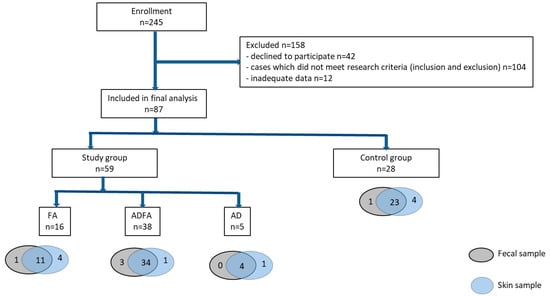
A Combined Analysis of Gut and Skin Microbiota in Infants with Food Allergy and Atopic Dermatitis: A Pilot Study
Source : https://doi.org/10.3390/nu13051682
The gut microbiota in patients with food allergy, and the skin microbiota in atopic dermatitis patients differ from those of healthy people. We hypothesize that relationships may exist between gut...
Certain clinical conditions were associated with characteristic bacterial taxa in the skin and gut microbiota. Positive correlations were found between skin and fecal samples in the abundance of Gemella among allergic infants, and Lactobacillus and Bacteroides among healthy infants. Although infants with allergies and healthy infants demonstrate...