



Genetic/Environmental Contributions and Immune Dysregulation in Children with Atopic Dermatitis - PubMed
Source : https://pubmed.ncbi.nlm.nih.gov/36447957/
Atopic dermatitis (AD) is one of the most common skin conditions in humans. AD affects up to 20% of children worldwide and results in morbidity for both patients and their...
Conclusions: Explaining the genetic basis of AD to patients and families may improve compliance with moisturizers and topical anti-inflammatory medications based on their understanding that AD patients are inherently predisposed to skin barrier defects and cutaneous inflammation. Meanwhile, minimizing environmental triggers may lead to...

Real-World Treatment Patterns and Treatment Benefits among Adult Patients with Atopic Dermatitis: Results from the Atopic Dermatitis Patient Satisfaction and Unmet Need Survey - PubMed
Source : https://pubmed.ncbi.nlm.nih.gov/36479885/
Atopic dermatitis is a chronic inflammatory skin disorder associated with a heterogeneous presentation and considerable disease burden. Exploring atopic dermatitis treatment patterns and patient benefits could improve disease management and...
Conclusions: The results of this study highlight the current unmet medical needs in AD management. This is especially so for adult patients experiencing barriers to JAK inhibitors and biologics with moderate/severe AD whose priority goals of itch relief and skin improvement were not met with topical therapy. There is a need to consider...

Eczema Care Online behavioural interventions to support self-care for children and young people: two independent, pragmatic, randomised controlled trials
Source : https://www.bmj.com/content/379/bmj-2022-072007
Objective To determine the effectiveness of two online behavioural interventions, one for parents and carers and one for young people, to support eczema self-management. Design Two independent, pragmatic, parallel group,...
Conclusions: Two online interventions for self-management of eczema aimed at parents or carers of children with eczema and at young people with eczema provide a useful, sustained benefit in managing eczema severity in children and young people when offered in addition to usual eczema care.
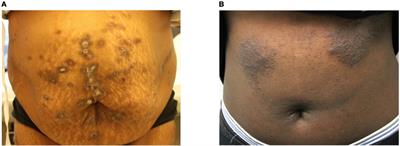
Extracellular matrix and dermal nerve growth factor dysregulation in prurigo nodularis compared to atopic dermatitis
Source : https://www.frontiersin.org/articles/10.3389/fmed.2022.1022889/abstract
Prurigo nodularis (PN) is a chronic, pruritic, inflammatory skin disease characterized by hyperkeratotic nodules on the trunk and extremities. While there is growing research on the immunological basis of PN,...
Conclusions: We present novel findings demonstrating increased neurotrophic and extracellular matrix remodeling signatures in PN compared to AD, possibly explaining the morphological differences in their lesions. These signatures may therefore be important components of the PN pathogenesis and may serve as therapeutic targets.
-
Jeremy Moss, Medical director and physician3yrI'm so glad research is now focusing on this troubling and difficult to treat condition. We now have our first approved medicine for PN. I hope that through more Show More
-
Barbara Honig3yrA useful approach to help determine best MOA to address this debilitating disease. IL 31 show much promise in PN.
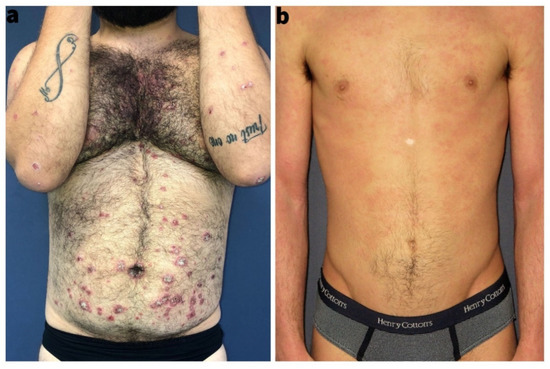
The Impact of Psoriasis and Atopic Dermatitis on Quality of Life: A Literature Research on Biomarkers
Source : https://www.mdpi.com/2075-1729/12/12/2026
Psoriasis (PSO) and Atopic dermatitis (AD) are common inflammatory skin diseases that affect people of all ages globally. They negatively impact the quality of life (QoL) of patients in health-related...
Conclusions: These biomarkers are potential life quality impairment prediction factors in PSO and AD, this could be very relevant. A challenge in future will be the development of a mechanism to get an adequate amount of sweat, as perspiration may vary from individual to individual. Additionally, the concentration of the biomarkers may vary in...
-
Jeremy Moss, Medical director and physician3yrI wonder if data like this may ultimately prove more relevant for those conducting clinical studies or for insurance companies than it does day-to-day in our clinics.
-
Barbara Honig3yrAn interesting concept, but not very relevant to everyday clinical practice and caring for our AD and PsO patients.