



This is used for those patients with obesity and they have an ample weight loss as experience from the weekly use of the product

Once-Weekly Semaglutide in Adolescents with Obesity - PubMed
Source : https://pubmed.ncbi.nlm.nih.gov/36322838/
The .gov means it's official. Federal government websites often end in .gov or .mil. Before sharing sensitive information, make sure you're on a federal government site. The site is secure....
Relevance: We were impressed that at week 68 the difference between the semaglutide group and the placebo group in the change in body-mass index was −16.7 percentage points and in body weight was −17.4 percentage points.
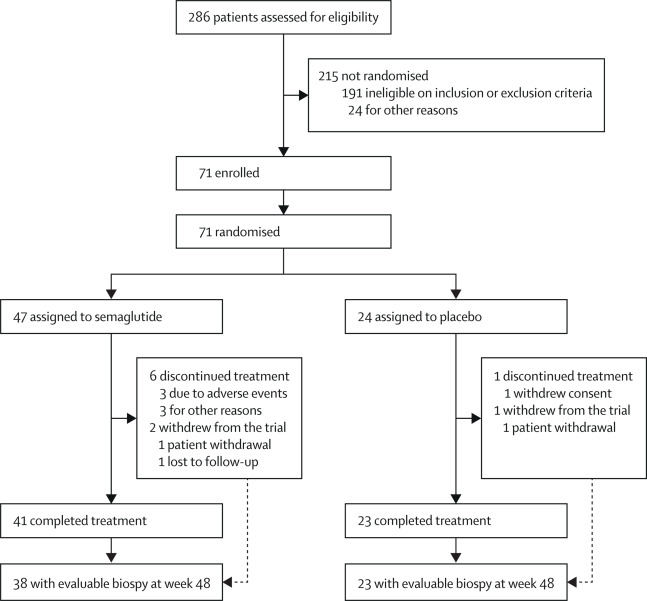
Semaglutide 2·4 mg once weekly in patients with non-alcoholic steatohepatitis-related cirrhosis: a randomised, placebo-controlled phase 2 trial
Source : https://www.thelancet.com/journals/langas/article/PIIS2468-1253(23)00068-7/fulltext
Patients with non-alcoholic steatohepatitis (NASH)-related cirrhosis are at particularly high risk of developing potentially life-threatening liver-related morbidities, such as portal hypertension, hepatic decompensation, hepatocellular carcinoma, liver-related mortality, and cardiovascular events.,...
Interpretation: In patients with NASH and compensated cirrhosis, semaglutide did not significantly improve fibrosis or achievement of NASH resolution versus placebo. No new safety concerns were raised.

Weight loss breaks the bond between nonalcoholic fatty liver disease and cardiovascular diseases: A clinical and epidemiological perspective - PubMed
Source : https://pubmed.ncbi.nlm.nih.gov/36951144/
Nonalcoholic fatty liver disease (NAFLD) is a growing health concern that is closely related to obesity and metabolic syndrome. In particular, NAFLD has been increasingly reported in adolescents and young...
Conclusions/Relevance: Besides the widespread use of bariatric surgery, the development of new GLP-1 agonists and GLP-1 GIP agonists revolutionized the treatment of obesity in recent years. Here, we discuss the interwoven correlation between obesity, NAFLD, and CVD and the benefits of weight-lowering approaches.
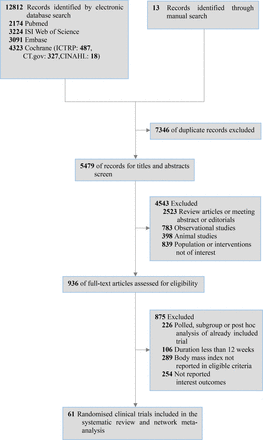
Efficacy and safety of GLP-1 receptor agonists versus SGLT-2 inhibitors in overweight/obese patients with or without diabetes mellitus: a systematic review and network meta-analysis
Source : https://bmjopen.bmj.com/content/13/3/e061807
Objective To compare the efficacy and safety between and within glucagon-like peptide-1 receptor agonists (GLP-1RAs) and sodium-glucose cotransporter 2 inhibitors (SGLT-2is) in overweight or obese adults with or without diabetes...
Conclusions: Semaglutide 2.4 mg showed the greatest effects on losing body weight, controlling glycaemic level and reducing blood pressure while it was associated with high risk of adverse events.
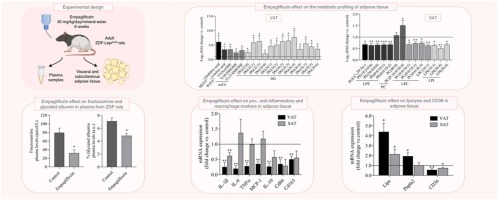
The lipidomic and inflammatory profiles of visceral and subcutaneous adipose tissues are distinctly regulated by the SGLT2 inhibitor empagliflozin in Zucker diabetic fatty rats
Source : https://www.sciencedirect.com/science/article/pii/S0753332223003232?via=ihub
Empagliflozin distinctly modulates the lipidome of rat white adipose tissue depots. * This drug induces a strong anti-inflammatory effect in rat visceral fat. * Empagliflozin reduces M1 and M2 macrophage...
Conclusions/Relevance: Our data highlighted differences in the VAT and SAT lipidomes, inflammatory profiles and lipolytic function, which suggest a distinct metabolism of these two white adipose tissue depots after the empagliflozin treatment.

GLP-1/GIP analogues: potential impact in the landscape of obesity pharmacotherapy - PubMed
Source : https://pubmed.ncbi.nlm.nih.gov/36927378/
The .gov means it's official. Federal government websites often end in .gov or .mil. Before sharing sensitive information, make sure you're on a federal government site. The site is secure....
Expert Opinion: GLP-1R mimetics are often discontinued within 24-months, owing to gastrointestinal side-effects, meaning long-term application of these agents in obesity is questioned. Combined GIPR/GLP-1R agonism appears to induce fewer side-effects, indicating GLP-1R/GIPR co-agonists may be more suitable for enduring obesity management....
Effect of Various Dosing Schedules on the Pharmacokinetics of Oral Semaglutide: A Randomised Trial in Healthy Subjects - Clinical Pharmacokinetics
Source : https://link.springer.com/article/10.1007/s40262-023-01223-9
Background Prescribing information instructs taking oral semaglutide (a glucagon-like peptide-1 analogue) in the fasting state, followed by a post-dose fasting period of ≥ 30 min. This trial compared the recommended dosing...
Conclusion: This trial supports dosing oral semaglutide in accordance with prescribing information, which requires dosing in the fasting state.

Effect of once-weekly subcutaneous semaglutide 2.4 mg on weight- and health-related quality of life in an East Asian population: Patient-reported outcomes from the STEP 6 trial - PubMed
Source : https://pubmed.ncbi.nlm.nih.gov/36905345/
We assessed the effect of semaglutide 2.4 and 1.7 mg versus placebo on weight-related quality of life (WRQOL) and health-related quality of life (HRQOL) in the STEP 6 trial. Adults...
Conclusion: Overweight and obesity can have a negative impact on WRQOL and HRQOL. Our results demonstrate that in people from East Asia with overweight or obesity, treatment with once-weekly subcutaneous semaglutide 2.4 mg, in addition to a reduced caloric diet and increased physical activity, improved aspects of WRQOL and HRQOL,...
-
Endocrinologist Nation3yrKey Points • Source: Clinical Obesity • Conclusions/Relevance: “Treatment with semaglutide 2.4 mg improved aspects of WRQOL [work-related quality of life] and HRQOL [health-related quality of life] in people from East Asia with overweight/obesity.” • In Show More
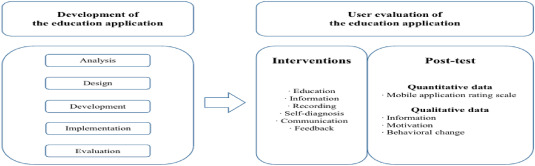
User evaluation of a mobile education application for the management of metabolic syndrome among cancer survivors
Source : https://www.ejoncologynursing.com/article/S1462-3889(23)00010-8/fulltext
Both cancer survivors and oncology nurse specialists scored the area of functionality as the highest. * Both cancer survivors and oncology nurse specialists scored the area of engagement as the...
Conclusions: Metabolic syndrome in cancer survivors can be effectively managed by using the educational application developed in this study by improving the shortcomings of the app for cancer survivors.

Glucagon-Like Peptide 1 Receptor Agonists Versus Sodium-Glucose Cotransporter 2 Inhibitors for Atherosclerotic Cardiovascular Disease in Patients With Type 2 Diabetes | Yanai | Cardiology Research
Source : https://cardiologyres.org/index.php/Cardiologyres/article/view/1459
Hidekatsu Yanai, Hiroki Adachi, Mariko Hakoshima, Hisayuki Katsuyama Abstract Beyond improving hemoglobin A1c (HbA1c) in adults with type 2 diabetes, glucagon-like peptide 1 receptor agonists (GLP-1RA) have been approved for...
Conclusions/Relevance: Compared with SGLT2i, GLP-1RA had a higher probability of decreasing serum triglyceride. GLP-1RA have multiple vascular biological anti-atherogenic properties.

Relationships between Obesity, Exercise Preferences, and Related Social Cognitive Theory Variables among Breast Cancer Survivors - PubMed
Source : https://pubmed.ncbi.nlm.nih.gov/36904284/
Breast cancer survivors with obesity have an increased risk of cancer recurrence, second malignancy, and comorbidities. Though physical activity (PA) interventions are needed, investigation of the relationships between obesity and...
Conclusions/Relevance: Those with class I/II obesity reported a higher negative outcome expectations score compared with class III. Location, walking self-efficacy, barriers, negative outcome expectations, and fitness should be considered when designing future PA programs among breast cancer survivors with obesity.

The Efficacy of GLP-1 Analogues on Appetite Parameters, Gastric Emptying, Food Preference and Taste Among Adults with Obesity: Systematic Review of Randomized Controlled Trials
Obesity is a growing health crisis that places a significant burden on health-care systems worldwide, with an estimated global prevalence of 2.1 billion people suffering from overweight or obesity in...

The Efficacy of GLP-1 Analogues on Appetite Parameters, Gastric Emptying, Food Preference and Taste Among Adults with Obesity: Systematic Review of Randomized Controlled Trials
Obesity is a growing health crisis that places a significant burden on health-care systems worldwide, with an estimated global prevalence of 2.1 billion people suffering from overweight or obesity in...
Conclusion: GLP-1 analogues are effective obesity management therapy that could decrease food intake and eventually reduce weight by suppressing appetite, reducing hunger, decreasing gastric emptying, and altering food preferences and taste. However, high-quality, long-term, large sample size studies are crucial to examine the efficacy and...
Relationship between perioperative semaglutide use and residual gastric content: A retrospective analysis of patients undergoing elective upper endoscopy
Source : https://www.sciencedirect.com/science/article/abs/pii/S0952818023000417?via=ihub
Semaglutide, a GLP-1 agonist, has been associated with delayed gastric emptying. * 5.1% of patients not using semaglutide had increased residual gastric content (RGC). * 24.2% of patients taking semaglutide...
Conclusions: Relationship between perioperative semaglutide use and residual gastric content: A retrospective analysis of patients undergoing elective upper endoscopy.
A Randomized Controlled Trial of Gamification, Financial Incentives, or Both to Increase Physical Activity Among Patients with Elevated Risk for Cardiovascular Disease: Rationale and Design of the BE ACTIVE Study
Source : https://www.sciencedirect.com/science/article/abs/pii/S0002870323000480?via=ihub
Available online 2 March 2023 Author links open overlay panel 1 2 3 4 5 , , 1 4 5 , , , 3 7 , , 1 3 7...
Conclusions: BE ACTIVE is a virtual, pragmatic randomized clinical trial powered to demonstrate whether gamification, financial incentives, or both are superior to attention control in increasing physical activity. Its results will have important implications for strategies to promote physical activity in patients with or at risk for ASCVD,...

Once-weekly semaglutide use in patients with type 2 diabetes: results from the SURE France multicentre, prospective, observational study - PubMed
Source : https://pubmed.ncbi.nlm.nih.gov/36869853/
The .gov means it's official. Federal government websites often end in .gov or .mil. Before sharing sensitive information, make sure you're on a federal government site. The site is secure....
Conclusions: These results support the benefits of semaglutide in a real-world setting in adults with T2D in France demonstrating a significant reduction in HbA1c and body weight.
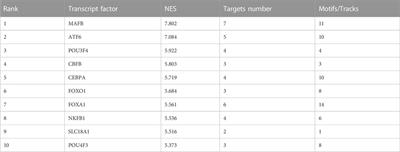
Systematic investigation of the underlying mechanisms of GLP-1 receptor agonists to prevent myocardial infarction in patients with type 2 diabetes mellitus using network pharmacology
Source : https://www.frontiersin.org/articles/10.3389/fphar.2023.1125753/full
Background: Several clinical trials have demonstrated that glucagon-like peptide-1 (GLP-1) receptor agonists (GLP-1RAs) reduce the incidence of non-fatal myocardial infarction (MI) in patients with type 2 diabetes mellitus (T2DM). However,...
Conclusion: GLP-1RAs exert multi-dimensional effects on reducing the occurrence of MI in T2DM patients by interfering with targets, biological processes, and cellular signaling pathways related to atheromatous plaque, myocardial remodeling, and thrombosis.

Pharmacological Support for the Treatment of Obesity-Present and Future - PubMed
Source : https://pubmed.ncbi.nlm.nih.gov/36767008/
The .gov means it's official. Federal government websites often end in .gov or .mil. Before sharing sensitive information, make sure you're on a federal government site. The site is secure....
Relevance: The presented paper is an overview of the studies related to both drugs currently used in the pharmacotherapy of obesity and those undergoing clinical trials, taking into account the individual approach to the patient.
The Association Between Obesity and the 5-Year Prevalence of Morbidity and Mortality Among Adults with Type 2 Diabetes - Diabetes Therapy
Source : https://link.springer.com/article/10.1007/s13300-023-01384-7
Introduction This retrospective claims database study examined the prevalence of mortality and morbidity among adults with type 2 diabetes (T2D) and obesity. Methods The study used deidentified data from 2007...
Conclusions: The results indicate that for a cohort of adults with T2D and obesity, obesity class 3 is associated with significantly higher mortality and morbidity, including CCO, CMO, ASCVD and OSA. These findings suggest that treatment which reduces obesity among individuals with T2D may have significant health benefits, although additional...