




Effects of Semaglutide on Albuminuria and Kidney Function in People With Overweight or Obesity With or Without Type 2 Diabetes: Exploratory Analysis From the STEP 1, 2, and 3 Trials
Hiddo J.L. Heerspink, Ellen Apperloo, Melanie Davies, Dror Dicker, Kristian Kandler, Julio Rosenstock, Rasmus Sørrig, Jack Lawson, Niels Zeuthen, David Cherney; Effects of Semaglutide on Albuminuria and Kidney Function in...
Conclusions/Relevance: This review summarizes recent evidence of low-LDL-C-related bleeding risk in patients on antithrombotic therapy and discusses potential measures for reducing this risk, underscoring the importance of carefully weighing the pros and cons of aggressive LDL-C lowering in patients on antithrombotic therapy.

The Effect of Semaglutide on Blood Pressure in Patients without Diabetes: A Systematic Review and Meta-Analysis - PubMed
Source : https://pubmed.ncbi.nlm.nih.gov/36769420/
(1) Background: Recent advances in the pharmacological treatment of obesity with glucagon-like peptide-1 receptor agonists (GLP-1 RA) highlight the potential to target excess body weight to improve blood pressure (BP)....
Conclusions: A clinically significant reduction in BP was evident following semaglutide treatment in normotensive populations without diabetes. The effect of semaglutide in those with obesity and hypertension is as yet undetermined. Targeting excess body weight may be a novel therapeutic strategy for these
GLP-1 Receptor Agonists and Risk of Adverse Cerebrovascular Outcomes in Type 2 Diabetes: A Systematic Review and Meta-Analysis of Randomized Controlled Trials
You do not currently have access to this article. GLP-1 Receptor Agonists and Risk of Adverse Cerebrovascular Outcomes in Type 2 Diabetes: A Systematic Review and Meta-Analysis of Randomized Controlled...
Conclusion: GLP-1RAs, precisely longer acting formulations, reduced ischemic cerebrovascular events in T2DM. Observed benefits were significantly higher in patients with shorter T2DM duration and higher eGFR.
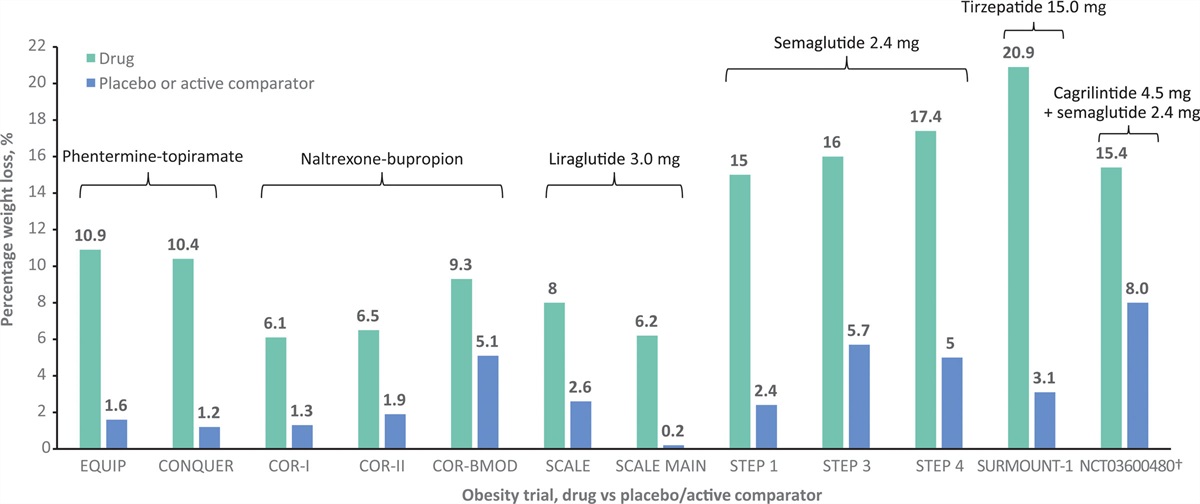
Prioritizing obesity treatment: expanding the role of cardiologists to improve cardiovascular health and outcomes
s for obesity, which are associated with numerous health benefits. Modest weight reductions of 5-10% improve cardiovascular risk factors, with greater weight loss bringing about greater benefits. Anti-obesity medications can...
Relevance: There are several treatment options for obesity, which are associated with numerous health benefits. Modest weight reductions of 5–10% improve cardiovascular risk factors, with greater weight loss bringing about greater benefits. Anti-obesity medications can support weight reduction when lifestyle modifications alone are...

Treatment with semaglutide, a GLP-1 receptor agonist, improves extracellular matrix remodeling in the pancreatic islet of diet-induced obese mice
Source : https://www.sciencedirect.com/science/article/abs/pii/S0024320523001364?via=ihub
Available online 14 February 2023, 121502 Author links open overlay panel Luiz E. Macedo Cardoso , Thatiany Souza Marinho , Fabiane Ferreira Martins , Marcia Barbosa Aguila , Carlos A....
Significance: Semaglutide improved the turnover of islet heparan sulfate proteoglycans, hyaluronan, chondroitin sulfate proteoglycans, and collagens in the islet ECM. Such changes should contribute to restoring a healthy islet functional milieu and should reduce the formation of cell-damaging amyloid deposits. Our findings also provide...

Once-weekly semaglutide use in patients with type 2 diabetes: real-world data from the SURE Italy observational study - PubMed
Source : https://pubmed.ncbi.nlm.nih.gov/36789682/
The .gov means it's official. Federal government websites often end in .gov or .mil. Before sharing sensitive information, make sure you're on a federal government site. The site is secure....
Conclusions: In routine clinical practice in Italy, patients with T2D treated with OW semaglutide for 30 weeks achieved clinically significant improvements in HbA1c , BW and other outcomes. This article is protected by copyright. All rights reserved.

Separate and combined effects of semaglutide and empagliflozin on kidney oxygenation and perfusion in people with type 2 diabetes: a randomised trial - Diabetologia
Source : https://link.springer.com/article/10.1007/s00125-023-05876-w
Aims/hypothesis Glucagon-like peptide-1 receptor agonists (GLP-1ras) and sodium-glucose cotransporter 2 inhibitors (SGLT2is) have shown kidney-protective effects. Improved kidney oxygenation and haemodynamic changes are suggested mechanisms; however, human data are scarce....
Conclusions/Interpretation: Our hypothesis, that semaglutide, empagliflozin or their combination improve kidney oxygenation, was rejected. On the contrary, empagliflozin induced a reduction in medullary kidney oxygenation. Semaglutide substantially reduced kidney perfusion without affecting oxygenation.

Discovery of Novel PTP1B Inhibitors with Once-Weekly Therapeutic Potential for Type 2 Diabetes: Design, Synthesis, and In Vitro and In Vivo Investigations of BimBH3 Peptide Analogues - PubMed
Source : https://pubmed.ncbi.nlm.nih.gov/36749220/
Poor medication adherence in patients with type 2 diabetes mellitus has become one of the main causes of suboptimal glycemic control. Once-weekly drugs can markedly improve the convenience, adherence, and...
Conclusion: The in vivo anti-T2DM evaluation validated the once-weekly therapeutic potential of analogues 19, 26, 27, 31, and 33, which were comparable with semaglutide and therefore presented as promising drug candidates.

Real world effectiveness of subcutaneous semaglutide in type 2 diabetes: A retrospective, cohort study (Sema-MiDiab01) - PubMed
Source : https://pubmed.ncbi.nlm.nih.gov/36743930/
The study highlighted benefits of semaglutide on metabolic control, multiple CV risk factors, and renal safety in the real-world. Semaglutide seems to be an advisable option for preservation of β-cell...
Discussion: The study highlighted benefits of semaglutide on metabolic control, multiple CV risk factors, and renal safety in the real-world. Semaglutide seems to be an advisable option for preservation of β-cell function and early evidence suggests it might have a role in modifying insulin resistance (HOMA-IR), the pathogenetic basis of...

Evaluating Weight Loss With Semaglutide in Elderly Patients With Type II Diabetes - PubMed
Source : https://pubmed.ncbi.nlm.nih.gov/36755752/
Background: Semaglutide is an effective agent indicated for type II diabetes mellitus (T2DM) treatment and weight management. It is unknown if the magnitude of weight loss differs significantly between nonelderly...
Conclusion: Weight loss differences between elderly and nonelderly Veterans diagnosed with T2DM initiating semaglutide were not statistically significant. Age may not be a robust predictor of semaglutide’s influence on weight.
Effect of the GLP-1 receptor agonist semaglutide on metabolic disturbances in clozapine-treated or olanzapine-treated patients with a schizophrenia spectrum disorder: study protocol of a placebo-controlled, randomised clinical trial (SemaPsychiatry)
Source : https://bmjopen.bmj.com/content/13/1/e068652
Introduction Clozapine and olanzapine are some of the most effective antipsychotics, but both are associated with weight gain and relevant metabolic disturbances, including pre-diabetes and diabetes. Non-pharmacological/behavioural interventions have had...
Relevance: We will investigate the long-term effects of add-on treatment with semaglutide once a week versus placebo once a week on the metabolic status in pre-diabetic (glycated haemoglobin A1c (HbA1c) 35–47 mmol/mol (5.4%–6.4%) and diabetic (HbA1c 48–57 mmol/mol (6.5%–7.4%)) patients diagnosed with a schizophrenia spectrum...

Obesity and diabetes: the final frontier - PubMed
Source : https://pubmed.ncbi.nlm.nih.gov/36710450/
Although bariatric surgery has been the primary approach to treating obese individuals, the emergence of agents impacting the brain satiety centers now promises effective, non-invasive treatment of obesity for individuals...
Expert opinion: Although bariatric surgery has been the primary approach to treating obese individuals, the emergence of agents impacting the brain satiety centers now promises effective, non-invasive treatment of obesity for individuals with and without diabetes. The GLP-1 receptor agonists have assumed the primary role in treating obesity...

The effects of weight-lowering pharmacotherapies on physical activity, function and fitness: A systematic review and meta-analysis of randomized controlled trials - PubMed
Source : https://pubmed.ncbi.nlm.nih.gov/36721366/
Weight-lowering pharmacotherapies provide an option for weight management; however, their effects on physical activity, function, and cardiorespiratory fitness are not fully understood. We conducted a systematic review and meta-analysis of...
Conclusions/Relevance: None of the studies reported a physical activity outcome, and only one study reported objectively measured cardiorespiratory fitness. Improvements in self-reported physical function were observed with weight loss therapy, but the effect on physical activity or objectively measured physical function and fitness could not...
Introducing an important therapy for obesity to primary care: once-weekly subcutaneous semaglutide 2.4 mg
Source : https://www.tandfonline.com/doi/full/10.1080/00325481.2022.2149005
Pharmacotherapy is typically recommended as an adjunct to lifestyle intervention to help achieve and maintain weight loss for those with obesity (body mass index [BMI] of ≥30 kg/m 2) or...
Conclusions/Relevance: The availability of once-weekly semaglutide 2.4 mg for weight management, as an adjunct to increased physical activity and a reduced-calorie diet that is individualized, scientifically supported, and relevant to the patient, represents an important advance in therapeutic options for patients with overweight or obesity.
-
Dr Hamid3yrObesity is a complex, chronic disease that represents a global public health challenge
Efficacy and safety of semaglutide for weight management: evidence from the STEP program
Source : https://www.tandfonline.com/doi/full/10.1080/00325481.2022.2147326
ABSTRACT ABSTRACT Obesity is a global health challenge. It is a multifactorial, complex, and progressive disease associated with various health complications and increased mortality. Lifestyle modifications are central to weight...
Relevance: Semaglutide 2.4 mg once weekly was generally well tolerated in adults with obesity, or overweight with comorbidities, without T2D (STEP 1, 3, 4, and 5), and in adults with T2D and overweight or obesity (STEP 2).
-
Dr Hamid3yrObesity is a global health challenge. It is a multifactorial, complex, and progressive disease associated with various health complications and increased mortality
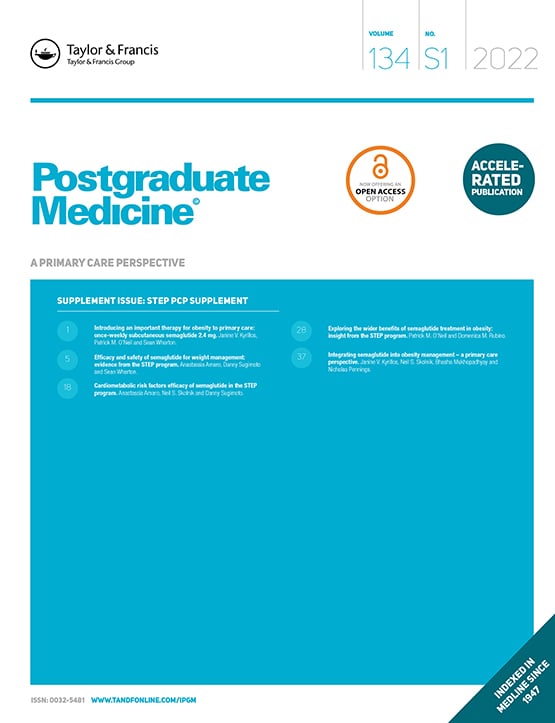
Exploring the wider benefits of semaglutide treatment in obesity: insight from the STEP program
Source : https://www.tandfonline.com/doi/full/10.1080/00325481.2022.2150006
ABSTRACT ABSTRACT Obesity negatively impacts patients' health-related quality of life (QOL) and is associated with a range of complications such as type 2 diabetes (T2D), cardiovascular disease, and sleep apnea,...
Conclusions/Relevance: Taken together, these are important considerations for primary care when incorporating pharmacotherapy for weight management.

Cardiometabolic risk factors efficacy of semaglutide in the STEP program - PubMed
Source : https://pubmed.ncbi.nlm.nih.gov/36691308/
People with overweight or obesity often suffer from associated cardiometabolic diseases and comorbidities. Current therapies for obesity include lifestyle intervention, bariatric surgery, and pharmacotherapy. The magnitude of weight loss achieved...
Conclusions/Relevance: Overall, across the STEP trials, treatment with semaglutide 2.4 mg versus placebo improved cardiometabolic risk factors associated with obesity, illustrating an effective treatment option for people with overweight (and associated comorbidities) or obesity.

Two-year effect of semaglutide 2.4 mg on control of eating in adults with overweight/obesity: STEP 5 - PubMed
Source : https://pubmed.ncbi.nlm.nih.gov/36655300/
The .gov means it's official. Federal government websites often end in .gov or .mil. Before sharing sensitive information, make sure you're on a federal government site. The site is secure....
Conclusions: In adults with overweight/obesity, semaglutide 2.4 mg improved short- and longer-term control of eating associated with substantial weight loss.
Semaglutide treatment attenuates vessel remodelling in ApoE−/− mice following vascular injury and blood flow perturbation
Source : https://www.sciencedirect.com/science/article/pii/S2667089522000165?via=ihub
Randomized clinical studies have shown a reduction in cardiovascular outcomes with glucagon-like peptide 1 receptor agonist (GLP-1RA) treatment with t...
Conclusions: Semaglutide treatment reduced vessel remodelling following electrical injury and blood flow perturbation in an atheroprone mouse model. This effect appears to be driven by anti-inflammatory and -proliferative mechanisms independent of GLP-1 receptor-mediated signalling in the resident vascular cells. This mechanism of action may...

Efficacy of Semaglutide in Treating Obesity: A Systematic Review of Randomized Controlled Trials (RCTs)
Obesity is a major health problem worldwide resulting in numerous health conditions such as heart disease, stroke, type 2 diabetes (T2D), and certain types of cancer which are among the...
Conclusions: We assessed the use of oral and subcutaneous semaglutide in our article. Most of the studies included demonstrated a positive effect of semaglutide for obesity treatment. Some studies also revealed a dose-dependent effect of the therapy in those with poorly controlled diabetes. Hence, the result seems to be overwhelmingly in favor...