



Comparison of Pediatric Dermatology Conditions Across Telehealth and In-Person Visits During the COVID-19 Pandemic - PubMed
Source : https://pubmed.ncbi.nlm.nih.gov/36342725/
Understanding the utility of virtual visits in pediatric dermatology practice has become increasingly important in the telehealth era. We compared the conditions diagnosed in pediatric dermatology between traditional in-person visits...
Discussion: When given the option, pediatric dermatology patients and their families were more likely to choose telehealth visits for the diagnosis and/or management of acne, hemangiomas, and contact dermatitis; however, they were more likely to choose in-person visits for atopic dermatitis, viral warts, and alopecia areata. These differences...
Genomic control of inflammation in experimental atopic dermatitis - Scientific Reports
Source : https://www.nature.com/articles/s41598-022-23042-x
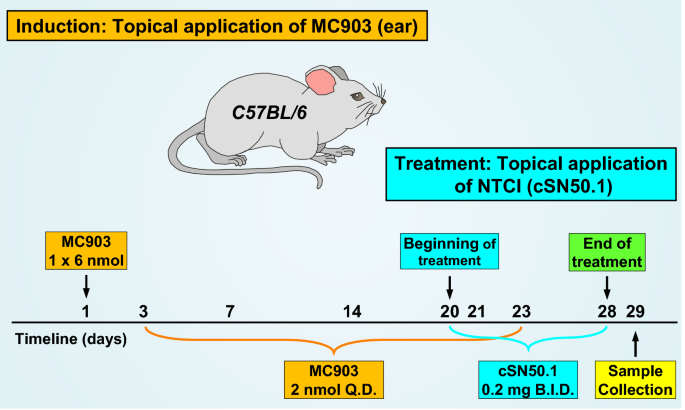
Atopic Dermatitis (AD) or eczema, a recurrent allergic inflammation of the skin, afflicts 10-20% of children and 5% adults of all racial and ethnic groups globally. We report a new...
Discussion: We show that NTCI effectively reduces the cardinal signs of AD in an experimental model. To our knowledge, this study is the first preclinical proof of concept for the genomic control of AD by NTCI at the nuclear transport level.
Involvement of Atopic Dermatitis in the Development of Systemic Inflammatory Diseases
Source : https://www.mdpi.com/1422-0067/23/21/13445/htm
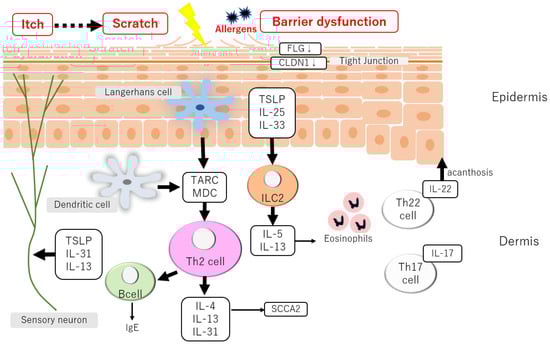
The skin is recognized as a peripheral lymphoid organ that plays an essential defensive action against external environmental stimuli. However, continuous stimulation of these factors causes chronic inflammation at the...
Discussion: These findings suggest that atopic-mediated systemic organ inflammation negatively regulates the development of systemic inflammatory responses and organ dysfunction. Therefore, the key factors in the pathogenesis of AD and systemic inflammatory disorders highlight the importance of systemic treatment against atopic skin...
Asthma, allergic rhinitis and atopic dermatitis in association with home environment - The RHINE study
Source : https://www.sciencedirect.com/science/article/pii/S0048969722057084?via=ihub
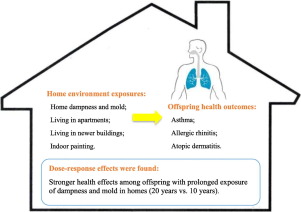
Home dampness and mold were obtained in two follow up investigations cover 20 years. * Home dampness and mold were associated with offspring asthma and atopic dermatitis. * There were...
Conclusions: Home dampness and mold were associated with offspring asthma and atopic dermatitis. There were dose-response effects of dampness and mold on asthma and dermatitis. Living in newer buildings and indoor painting were risk factors.
-
Jeremy Moss, Medical director and physician3yrThis longitudinal study adds to the work of previous authors who have found similar results. Importantly, the are some obvious conclusions about interventions that can be taken in the Show More

Skin biomarkers predict AD risk, severity in newborns | Latest news for Doctors, Nurses and Pharmacists | Dermatology
Source : https://specialty.mims.com/topic/skin-biomarkers-predict-ad-risk--severity-in-newborns
Predicting which newborn will go on to develop atopic dermatitis (AD) and how severe it will be is now feasible, according to the BABY* study. Both term (gestational age 37-41...
Conclusion: TARC levels were highest in children in whom AD onset occurred at a later age than those diagnosed before 6 months of age. There was also a positive association between TARC level and AD severity. In children born at term, TARC increased the chances that the severity of AD would be greater than had it not been present (adjusted HR,...