



Strategies to Improve Adherence to Skin Self-examination and Other Self-management Practices in People at High Risk of Melanoma: A Scoping Review of Randomized Clinical Trials - PubMed
Source : https://pubmed.ncbi.nlm.nih.gov/36857048/
Using an adaptation of the World Health Organization framework for clinical adherence, this scoping review of randomized clinical trials identified key concepts as well as gaps in the way adherence...
Discussion: Using an adaptation of the World Health Organization framework for clinical adherence, this scoping review of randomized clinical trials identified key concepts as well as gaps in the way adherence is approached in design, conduct, and reporting of trials for skin self-examination and other self-management practices in people at...
-
Barbara Honig3yrI offer full skin exams to every patient because they are so important. Yet despite how many melanomas I have incidentally diagnosed on patients during full skin exams who walk Show More

The Intestinal and Skin Microbiome in Patients with Atopic Dermatitis and Their Influence on the Course of the Disease: A Literature Review - PubMed
Source : https://pubmed.ncbi.nlm.nih.gov/36900771/
Bacteria inhabiting the digestive tract are responsible for our health. The microbiome is essential for the development of the immune system and homeostasis of the body. Maintaining homeostasis is very...
Conclusions/Relevance: Perhaps young children diagnosed with AD present specific characteristics of the intestinal microflora. This might be related to the early introduction of antibiotics and dietary manipulations in breastfeeding mothers in the early childhood of AD patients. It is most likely related to the abuse of antibiotics from the...
-
Barbara Honig3yrThis is an intriguing concept that definitely needs to be investigated further. GI microflora has clearly been implicated as a triggers for many autoimmune disorders.

Noncutaneous and Cutaneous Cancer Risk in Patients With Atopic Dermatitis: A Systematic Review and Meta-analysis - PubMed
Source : https://pubmed.ncbi.nlm.nih.gov/31825457/
Observational evidence suggests potential associations between AD and increased risk of keratinocyte carcinoma and kidney cancer as well as lower odds of lung and respiratory system cancers. Further research is...
Conclusion: Adults with moderate-to-severe AD had a significantly higher risk of developing melanoma (RR 1.11; 95% Cl, 1.05-1.17; p<.001), SCC (RR 1.25; 95% Cl, 1.22-1.28; p<.001), and BCC (RR 1.17; 95% Cl, 1.14-1.20; p<.001) compared to adults with mild AD. In conclusion, our findings support an increased risk of melanoma, SCC, and...
-
Barbara Honig3yrThese results are consistent with the immune-mediated nature of both autoimmune diseases like AD and certain skin cancers. Also, moderate to severe AD patients may be more skin cancer prone Show More

Exposure to isocyanates predicts atopic dermatitis prevalence and disrupts therapeutic pathways in commensal bacteria - PubMed
Source : https://pubmed.ncbi.nlm.nih.gov/36608129/
Atopic dermatitis (AD) is a chronic inflammatory skin condition increasing in industrial nations at a pace that suggests environmental drivers. We hypothesize that the dysbiosis associated with AD may signal...
Conclusion: While humans have only had approximately 10 generations to adapt to the industrial revolution and even fewer to the exposome of the last half century, commensal microbes have had over a million generations since 1950 alone. In this report, we propose a paradigm for research, which suggests that dysbiosis recapitulates...
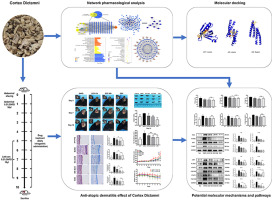
Network pharmacology-based analysis to explore the therapeutic mechanism of Cortex Dictamni on atopic dermatitis
Dermatitis is a common clinical chronic inflammatory skin disease, which incidence has been on the rise in recent years. It not only seriously affects the physical and mental health of...
Conclusion: Cortex Dictamni can improve the symptoms of skin lesions and the degree of inflammation caused by AD, and may inhibit AD through multiple pathways, such as regulating PI3K-AKT and JAK1-STAT3/STAT6 pathways. These results not only provide experimental evidence for the clinical application of Cortex Dictamni but also provide some...